
Learning to Run the Race I’m In
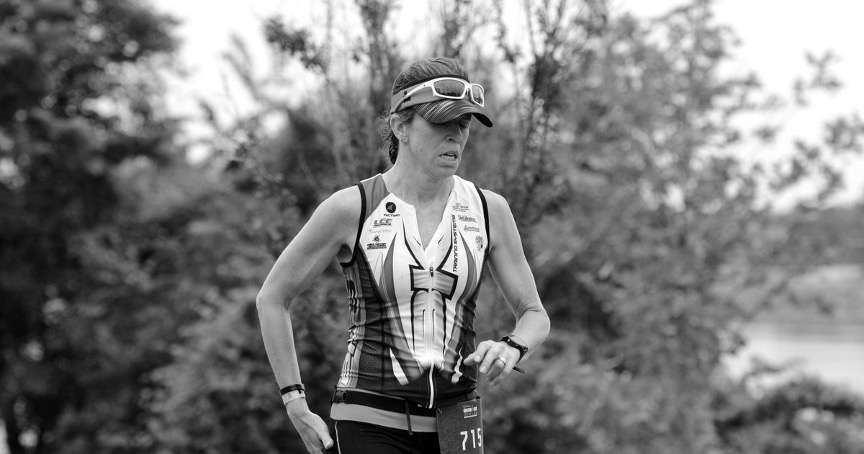
Having been an endurance athlete for more than two decades, I’m often asked, “What’s the next race?” or “When are you racing again?”
Usually, I have a quick answer. By about three-quarters of the way through a year, I’ve already booked, or at least mentally mapped out, the races I’ll tackle the following year. Clearly, I like to race and challenge myself. But I also like having something to look forward to. I like setting goals, building a plan and working toward something that seems just a little out of reach.
Today, if you asked me about my upcoming races, my answer would be different. I don’t have anything scheduled.
For the first time in my life, I’ve had to drop out of races and avoid scheduling new ones because my body simply hasn’t cooperated. Partially torn biceps and forearm tendons affected my swimming for a time, while pinched nerves in my lower back significantly impacted my ability to bike and run, making training for a marathon or IRONMAN nearly impossible.
To say it’s been difficult would be an understatement.
I’ve experienced plenty of frustration and anger, but also hope, excitement and gratitude. And as I’ve slowly gotten healthier, I’ve realized this season has taught me a few things.
First, adapting isn’t the same as giving up.
I may not be able to train or race at the level I’m accustomed to, but I can still move. I’ve learned to listen to my body rather than fight it. I’ve found different ways to get cardio. I’ve done more yoga in the past year than I have in the rest of my life combined, and I’ve spent countless hours on prehab and rehab, building strength in the places that need it most.
The workouts look different. That doesn’t make them less valuable.
Second, sometimes stepping away reminds us how much something matters to us.
Over the past few years, I’d started wondering whether it was time to slow down. After more than 20 years as an endurance athlete, maybe I should find a different, less intense way to stay fit and active.
This forced “time off” answered that question for me. I still want to train. I still want to race. I’m not sure what that will look like or when I’ll be ready, but I know I’m not finished yet.
And perhaps the most important lesson has been this: we don’t always get to choose our circumstances, but we have more choice than we realize in how we respond to them.
I’ve certainly had a few “woe is me” moments. But overall, I’ve surprised myself with how positive and optimistic I’ve remained. I’d like to think some of that comes from years of mental resilience training. Just as I’ve trained my body to endure discomfort, I’ve trained my brain to look for alternative options when things are difficult.
That doesn’t mean pretending the hard things aren’t hard. It means acknowledging the disappointment without allowing it to be the only thing I see.
And that lesson reaches well beyond racing.
All of us encounter times when the plan changes. An injury. A career setback. A relationship that changes. A goal we worked toward but didn’t reach. A circumstance we never expected and certainly didn’t choose.
Our natural instinct is often to focus on what we’ve lost or what we can no longer do. But resilience is also learning to ask different questions:
What can I do from here? What is this challenge teaching me? What do I still have to be grateful for?
For me, the answers are pretty significant. I can still move. I can still challenge myself. I can still get stronger. And after more than two decades of training and racing, I can be incredibly grateful for all the miles, finish lines, experiences and memories my body has already given me.
I hope there are more races ahead. I bet there are.
But for now, I’m learning that not every season is about chasing the next finish line. Sometimes the challenge is appreciating where you are, adapting to the course in front of you and being grateful that you’re still in the race.